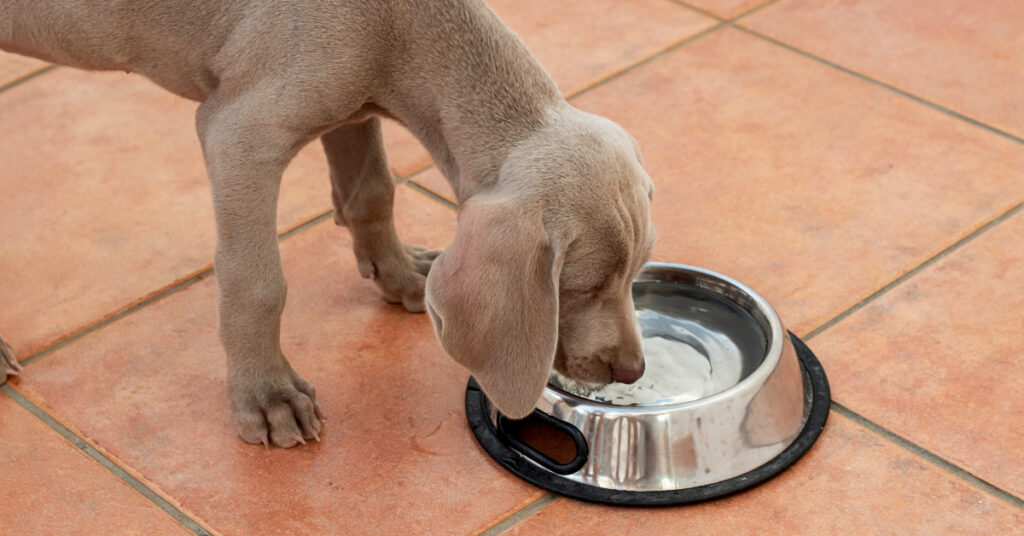
One day you notice the water bowl is empty again, far sooner than usual. Your dog seems to be visiting the bowl constantly, lapping up water every chance they get. While thirst is a normal and healthy behavior, a dog drinking a lot of water can sometimes signal an underlying health issue that deserves attention. Increased thirst, also called polydipsia, may appear alongside other changes such as frequent urination, vomiting, or unusual behaviors. In this blog, we’ll explore why a dog may be drinking excessive water, what symptoms can accompany it, and when pet owners in Arvada should contact a veterinarian. If your dog’s thirst suddenly changes, the team at Arvada Veterinary Hospital is here to help. Call (303) 424-4439 or book an appointment online.
How Much Water Should a Dog Drink Daily?
Every dog needs water to maintain normal body function. Water regulates body temperature, supports digestion, transports nutrients, and helps eliminate waste products through urine. Because of these essential roles, dogs naturally drink throughout the day.
Veterinarians often estimate that a healthy dog drinks about one ounce of water per pound of body weight each day. A 20-pound dog, for example, typically drinks around 20 ounces of water daily, while a 70-pound dog may drink closer to 70 ounces. This number can vary depending on several factors such as activity level, diet, and environmental temperature.
Factors That Influence How Much Water Dogs Drink
Dogs that eat primarily dry food may drink more water than dogs eating canned or fresh diets because kibble contains very little moisture. Similarly, active dogs or dogs spending time outdoors in warm weather often require additional hydration. Some variation is normal, but a sudden increase in thirst can signal something different.
Questions Pet Owners Often Ask About Dog Water Intake
Pet owners frequently ask questions such as:
- “Why is my dog drinking a lot of water suddenly?”
- “Is it normal if my dog drinks excessive water and urinates more?”
- “Should I worry if my dog keeps drinking water all day?”
Understanding how much your dog usually drinks is the first step in answering these questions.
How to Determine How Much Your Dog Drinks Daily
Many pet owners assume they would notice if their dog began drinking too much water. In reality, small increases can go unnoticed until other symptoms appear. Tracking water intake for a few days can provide helpful insight. Measuring how much water you place in the bowl each morning allows you to estimate how much disappears throughout the day. If your dog shares a bowl with other pets, separating them during observation may help you gather more accurate information.
Signs Your Dog May Be Drinking Excessive Water
While measuring intake provides useful information, behavior often offers the first clues. Watch for patterns such as:
- Frequent trips to the water bowl
- Drinking immediately after finishing a bowl
- Waking at night to drink
- Increased urination or accidents in the house
- Sudden changes in thirst compared to normal habits
If your dog drinks a lot of water every day but otherwise appears healthy, it may still be worthwhile to discuss the change with your veterinarian. Subtle shifts in behavior often provide early clues about medical conditions.
Why Is My Dog Drinking So Much Water?
Many different factors can cause a dog to drink a lot of water, and not all of them indicate illness. Environmental changes, dietary differences, and increased exercise can all raise water needs.
However, persistent excessive thirst often points to an underlying medical condition that requires veterinary evaluation.
Common Causes of Increased Thirst in Dogs
Veterinarians frequently investigate several potential causes when a dog shows signs of polydipsia:
- Kidney disease – The kidneys play a major role in fluid balance. When kidney function declines, dogs often drink and urinate more.
- Diabetes mellitus – Dogs with diabetes frequently develop increased thirst along with increased appetite and urination.
- Hormonal disorders – Conditions affecting hormones, such as adrenal gland disorders, can influence thirst and urine production.
- Urinary tract conditions – Infections or inflammation can lead to frequent urination and increased water intake.
- Certain medications – Some medications may cause dogs to drink more water as a side effect.
- Liver disease – Changes in metabolism and toxin processing may affect thirst.
Each of these possibilities requires veterinary evaluation. Increased thirst alone rarely provides enough information to determine the exact cause.
Why Does My Dog Keep Drinking Water and Throwing Up?
Some dogs that drink large amounts of water may vomit shortly afterward. This situation can be concerning for pet owners because the vomiting often appears immediately after drinking.
Several factors may contribute to this pattern. Drinking large volumes of water quickly can stretch the stomach and trigger vomiting. However, vomiting combined with excessive thirst may also indicate digestive upset, systemic illness, or metabolic disorders.
Why Vomiting With Excessive Thirst Matters
When a dog keeps drinking water and vomiting, veterinarians look closely at additional symptoms such as:
- Lethargy or weakness
- Changes in appetite
- Abdominal discomfort
- Dehydration
- Changes in urination
Because vomiting can worsen dehydration, a dog experiencing both symptoms may require prompt veterinary attention. If your dog repeatedly drinks water and vomits afterward, contacting your veterinarian is the safest step.
Why Is My Dog Drinking Lots of Water and Licking Their Paws?
Some pet owners notice two unusual behaviors happening at the same time: increased thirst and frequent paw licking. While these symptoms may appear unrelated, they can sometimes share underlying causes.
Possible Links Between Thirst and Paw Licking
Paw licking often develops in response to:
- Skin irritation or allergies
- Infections affecting the skin
- Environmental irritants
- Behavioral stress
Dogs experiencing allergies or skin discomfort may drink more water due to inflammation, medication effects, or overall changes in their body’s physiology. In some cases, endocrine conditions affecting hormones can also produce both symptoms. Because paw licking can quickly lead to skin infections or chronic irritation, a veterinary exam can help identify the source and guide the next steps.
Why Is My Dog Drinking Lots of Water and Peeing a Lot?
One of the most common combinations veterinarians evaluate is a dog drinking a lot of water and urinating frequently. Increased thirst and increased urination often occur together because the body tries to maintain fluid balance.
How Polydipsia and Polyuria Are Connected
Veterinary professionals use the term polyuria to describe increased urine production. When polyuria occurs, dogs lose more water through urine and instinctively drink more to compensate.
Pet owners might notice:
- Larger urine puddles outdoors
- More frequent bathroom breaks
- Accidents in previously house-trained dogs
- Increased nighttime urination
This pattern commonly appears with metabolic diseases such as diabetes, kidney disease, and hormonal imbalances. Early veterinary evaluation allows doctors to identify the cause before complications develop.
Why Does My Dog Drink a Lot of Water at Night?
Dogs sometimes appear to drink normal amounts during the day but suddenly consume large quantities of water at night. This behavior can disrupt sleep for both pets and owners.
Possible Reasons for Nighttime Thirst
Nighttime drinking may occur because:
- The dog was more active earlier in the day
- Dry indoor air increases thirst overnight
- Medical conditions influence fluid balance
Some diseases alter hormone cycles that affect thirst and urination. When this occurs, dogs may wake repeatedly to drink and urinate during nighttime hours. If your dog drinks excessive water at night or frequently asks to go outside overnight, a veterinary visit can help determine whether the behavior is medical or environmental.
When to Go to the Vet for Excessive Thirst in Dogs
Occasional increases in water intake may not indicate a problem. However, certain patterns signal that a dog needs veterinary evaluation. Contact your veterinarian if you notice:
- A sudden increase in water consumption
- Frequent urination or accidents in the house
- Vomiting along with excessive thirst
- Changes in appetite or weight
- Lethargy or behavioral changes
- Increased thirst lasting several days
These signs may indicate medical conditions that require testing and professional care. If your dog is drinking excessive water, scheduling an appointment allows a veterinarian to evaluate the situation thoroughly. Pet owners in Arvada can call Arvada Veterinary Hospital at (303) 424-4439 to discuss symptoms or arrange an exam.
How Is Excessive Thirst in Dogs Diagnosed?
Diagnosing polydipsia requires a detailed investigation because many different conditions can produce similar symptoms. Veterinarians begin by gathering a thorough history, including changes in thirst, urination, appetite, and energy level.
Diagnostic Tools Veterinarians May Use
A veterinary evaluation may include several types of tests designed to assess organ function and metabolic health:
- Blood testing to evaluate kidney function, glucose levels, and organ health
- Urinalysis to measure urine concentration and detect infection
- Imaging tests to examine internal organs
- Hormone testing when endocrine conditions are suspected
These diagnostics help veterinarians determine whether the dog drinking a lot of water results from metabolic disease, infection, hormonal imbalance, or another medical condition.
Treatment for Dogs That Drink a Lot of Water
Treatment depends entirely on the underlying cause of the increased thirst. Because excessive water consumption can stem from many conditions, veterinarians focus on identifying the root issue before recommending a treatment plan. Once a diagnosis is made, our veterinary team will discuss management strategies designed to address the specific medical problem affecting your dog.
Some conditions require ongoing monitoring and adjustments over time, while others improve once the primary issue is treated. Veterinary care also includes monitoring your dog’s hydration levels, kidney function, and overall health during treatment. Regular follow-up visits help ensure the plan remains effective.
When Your Dog’s Thirst Deserves a Closer Look
Watching your dog’s habits provides valuable clues about their health. A water bowl that empties faster than usual, nighttime drinking, or increased urination may seem minor at first, but these signs can reveal important information about your dog’s well-being. When pet owners notice a dog drinking a lot of water, veterinary evaluation helps determine whether the change is harmless or a sign of a deeper issue. Early assessment allows veterinarians to investigate symptoms, run appropriate tests, and guide the next steps for your dog’s care. If your dog’s thirst has changed, the team at Arvada Veterinary Hospital in Arvada, Colorado is ready to help. Call (303) 424-4439 or book an appointment online to have your dog evaluated.